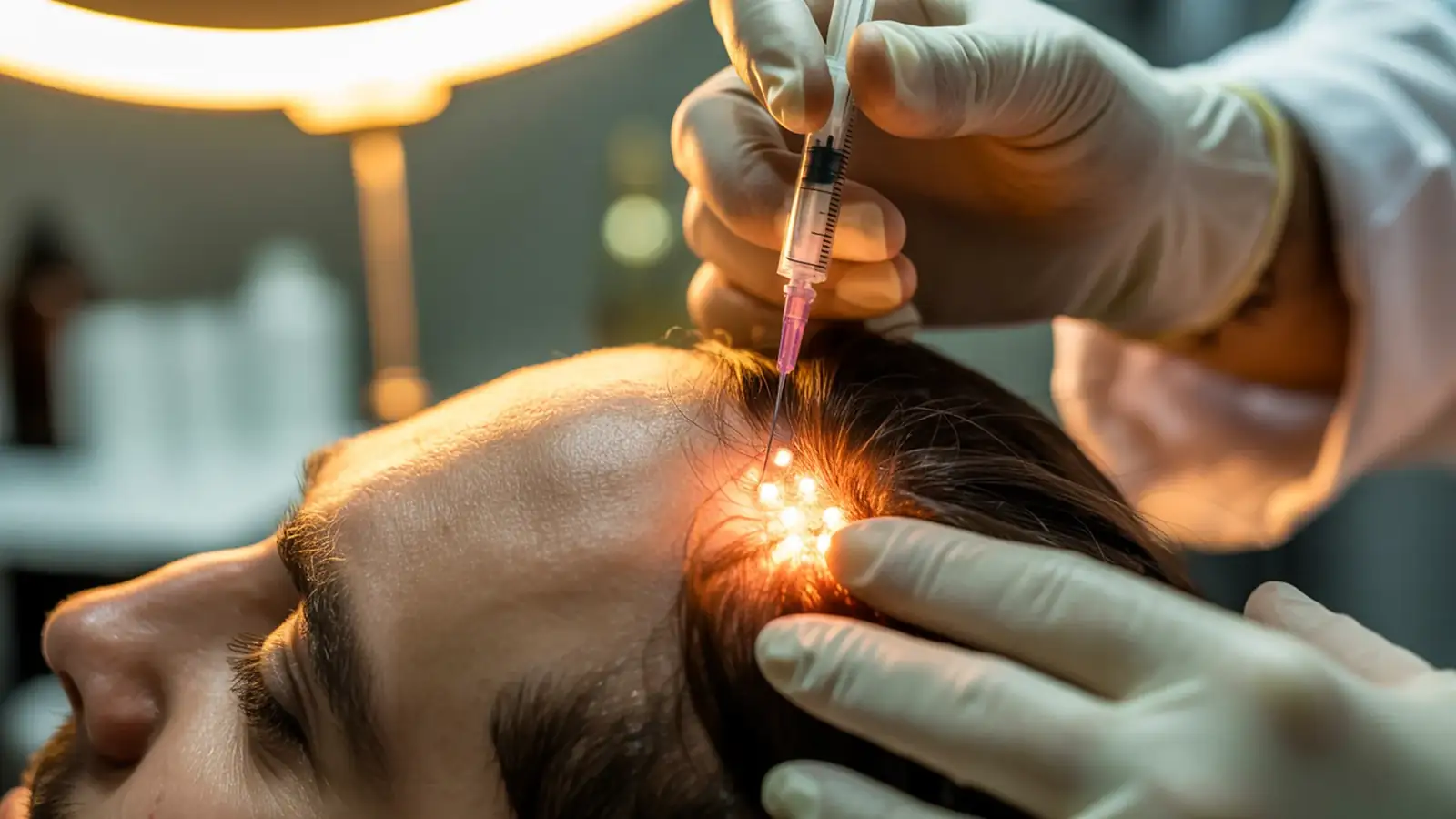
Exosome therapy is changing how experts treat hair thinning. What the science says, who benefits most, and what to expect.
I have been in medicine for over 40 years, and hair loss is one of those concerns that patients bring up almost apologetically — as if thinning hair is too small a problem to mention. But it is not. Hair loss affects how people see themselves every morning in the mirror, and it carries real emotional weight.
Over the past two years, exosome therapy has moved from being a niche research topic to a treatment we routinely offer at our Richmond spa. The results have been encouraging enough that I want to share what we have learned — honestly, without overpromising.
What Exosomes Actually Are (and Why They Matter for Your Scalp)
Exosomes are tiny vesicles — about one-thousandth the size of a human cell — that carry growth factors, proteins, and genetic material between cells. Think of them as delivery packages that tell dormant follicles to wake up and start producing hair again.
Unlike PRP, which depends on your own platelet count and varies from person to person, lab-cultured exosomes deliver a consistent, high concentration of regenerative signals. Published research suggests exosomes can carry 100 to 1,000 times more growth factors per dose than a typical PRP preparation.
At our spa, we pair exosome injections with RF energy and LED light therapy to give follicles every advantage. The combination addresses blood supply, inflammation, and cellular signalling all at once.
Who Responds Best to Exosome Hair Therapy
Not every patient is the right candidate. Exosomes work best when follicles are miniaturised but still present — not when they have been completely gone for years.
- Early to moderate androgenetic alopecia (male and female pattern thinning)
- Post-pregnancy shedding where follicles are in a resting phase
- Stress-triggered telogen effluvium — the diffuse thinning that follows a major life event
- Patients who want to strengthen transplanted hair grafts after a surgical procedure
If the scalp has been completely smooth and bare for a decade, exosomes alone are unlikely to reverse that. Honesty about expectations is the starting point of every treatment plan I write.
What a Typical Treatment Course Looks Like
We begin with a scalp assessment — examining follicle density, miniaturisation patterns, and scalp health under magnification. From there, a customised protocol takes shape.
Most patients start with three sessions, spaced four to six weeks apart. Each session takes roughly 45 minutes. The exosome solution is injected into the scalp using fine needles, and we follow with RF and LED to boost absorption and blood flow.
Results are not overnight. Most patients notice reduced shedding within the first month, visible thickness improvements by month three, and measurable density gains by month six. Clinical studies report a 10 to 30 percent increase in hair density over a six-month period.
Exosomes vs. PRP vs. Minoxidil — How They Compare
Patients often ask which treatment is "best," but the real answer is that they serve different roles.
- PRP uses your own blood and works well as a maintenance booster, but results vary depending on your platelet concentration and overall health
- Minoxidil is a daily topical that improves blood flow to follicles — effective but requires lifelong commitment and can cause scalp irritation
- Exosomes deliver standardised regenerative signals directly to the follicle, with periodic sessions rather than daily application
In practice, we often combine approaches. A patient might use exosome therapy as the primary treatment, minoxidil at home for ongoing support, and PRP as an occasional booster. The combination tends to outperform any single treatment.
Safety and What to Expect After Treatment
In published trials, the side-effect profile of exosome therapy has been reassuring. The most common reactions are temporary redness and mild tenderness at injection sites — both resolve within 24 to 48 hours. No serious adverse events have been reported in hair restoration trials to date.
Patients can return to normal activities the same day. We recommend avoiding vigorous exercise and direct sun exposure on the scalp for 48 hours.
Considering exosome therapy for hair thinning? Book a complimentary scalp assessment at our Richmond spa. Our team will review your follicle health and create a personalised plan — no obligation, no pressure. Call 604-783-2228 or visit our contact page.
The Bottom Line
Exosome therapy is not a miracle cure, and anyone who tells you otherwise is overselling. What it is: a scientifically grounded treatment that delivers measurable improvements for the right patients. Combined with professional oversight and complementary therapies, it gives thinning hair a genuine second chance.
If you are noticing more hair on your pillow or a wider part line, do not wait until the problem is advanced. Early intervention is where exosome therapy shines — and where the results speak for themselves.